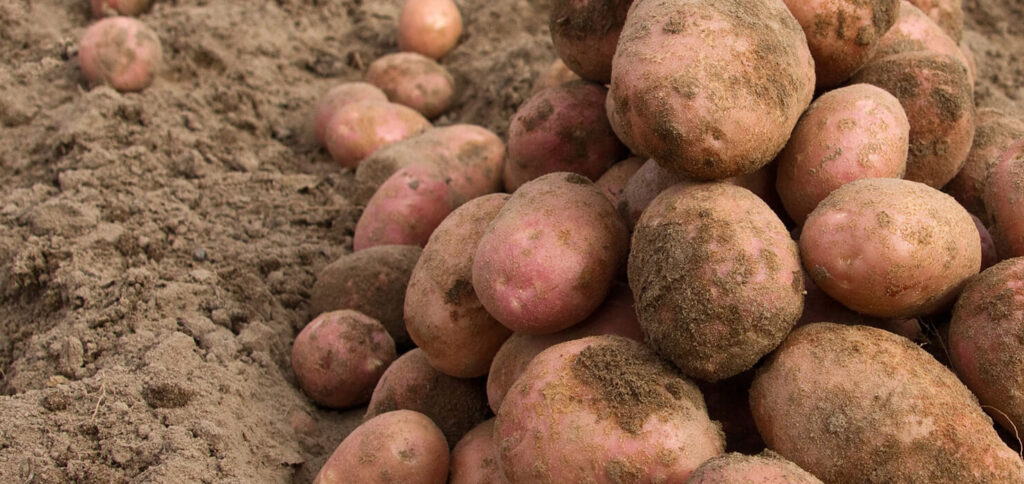
Behind every successful potato harvest lies a crucial but often underestimated factor: the quality of seed potatoes. Unlike true seeds, potatoes are propagated vegetatively through tubers, which means any disease or weakness in the seed is passed directly to the next crop.
For growers and exporters worldwide, starting with certified, healthy seed potatoes is not just best practice — it’s a business necessity. In this guide, we explain why seed potato quality matters, how certification works, and what benefits clean seed brings across the potato supply chain.
1. What Defines a Quality Seed Potato?
High-quality seed potatoes meet strict standards regarding:
Health: free from viruses, bacteria, and fungal diseases.
Purity: true-to-type with no mixing of varieties.
Size: usually 28–55 mm tubers for optimal planting.
Physiological age: not too old (risk of degeneration) or too young (slow emergence).
💡 Practical tip: Uniform seed size ensures even emergence and canopy closure, which is key to achieving consistent yields.
2. Certified vs. Farm-Saved Seed
Certified seed potatoes are produced under official supervision, tested for diseases, and meet international quality standards (e.g., EU or national certification schemes).
Farm-saved seed may look cheaper but carries a high risk of spreading diseases like viral infections, bacterial wilt, or late blight spores.
📊 Research insight: Using certified seed potatoes can increase yields by 20–40% compared to farm-saved seed.
3. The Role of Seed Quality in Yield and Profitability
Higher yields – Strong, healthy plants develop more tubers per plant.
Uniformity – Even emergence and growth make harvesting and marketing more efficient.
Lower risk – Reduced spread of devastating diseases.
Better storability – Healthy seed produces tubers with firmer skins and longer shelf life.
👉 For exporters, these advantages translate into more reliable supply and higher market value.
4. Certification and International Trade
Global potato trade relies on trust in seed quality. Certification guarantees that:
Seed lots are tested and traceable.
Tubers are free from quarantine diseases (e.g., potato cyst nematodes, ring rot).
Buyers worldwide receive consistent planting material.
🌍 The Netherlands is the global leader in seed potato production and export, supplying more than 70 countries. Certification under EU and Dutch NAK standards ensures the highest reliability.
5. Challenges in Seed Potato Production
Disease pressure: Viruses and bacterial wilt remain major threats.
Climate change: Warmer winters and wetter springs complicate seed production.
Cost barrier: Certified seed is more expensive upfront, but long-term gains outweigh the costs.
💡 Sustainability trend: New breeding programs focus on developing varieties with natural resistance, reducing the need for heavy chemical protection in seed multiplication.
6. Best Practices for Growers and Exporters
Always source from certified suppliers.
Avoid reusing farm-saved seed for more than one or two cycles.
Store seed at 2–4°C to preserve dormancy.
Pre-sprout seed under controlled light for faster emergence.
Partner with recognized exporters to ensure phytosanitary compliance.
✅ Conclusion
Seed potatoes are the foundation of the global potato industry. High-quality, certified seed not only boosts yields and profitability but also safeguards international trade by preventing the spread of diseases. For growers and exporters alike, investing in good seed is investing in long-term success.
🔗 Back to overview: Potato Cultivation & Varieties
🔗 Explore Global Seed Potato Suppliers