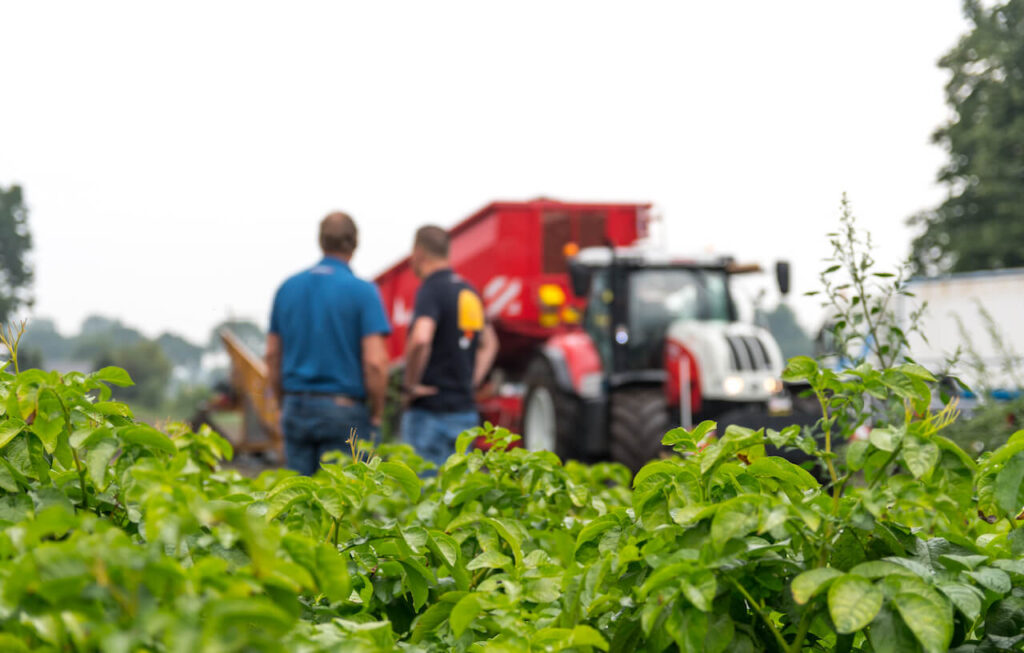
Potatoes are one of the world’s most widely grown crops, but even experienced farmers sometimes make mistakes that reduce yields and quality. From poor soil preparation to mishandling seed potatoes, small errors can have big consequences for both local growers and global exporters.
In this article, we highlight the most common potato growth mistakes and provide practical solutions to help you optimize your crop and avoid costly setbacks.
1. Planting Poor-Quality Seed Potatoes
- The mistake: Using uncertified or farm-saved seed increases the risk of diseases like viral infections and bacterial wilt.
- The solution: Always plant certified, disease-free seed potatoes, ideally sourced from reputable suppliers.
👉 Tip: Uniform seed size (28–55 mm) ensures even emergence and canopy growth.
2. Ignoring Crop Rotation
- The mistake: Planting potatoes in the same field repeatedly encourages buildup of pests (e.g., nematodes) and diseases (e.g., late blight).
- The solution: Practice at least a 4-year rotation with cereals or legumes to break disease cycles.
3. Poor Soil Preparation
- The mistake: Planting in compacted or poorly drained soils restricts root and tuber development.
- The solution: Prepare a fine seedbed with good tilth and drainage. Use raised beds or ridging in heavy soils.
4. Planting at the Wrong Time
- The mistake: Early planting in cold soils delays emergence, while late planting reduces tuber bulking.
- The solution: Monitor soil temperature (minimum 8°C) and moisture to choose the right planting window.
5. Inadequate Fertilization
- The mistake: Too much nitrogen encourages excessive foliage but delays tuber formation.
- The solution: Apply a balanced fertilizer with sufficient potassium and phosphorus for strong tubers.
👉 Note: Potatoes require up to twice as much potassium as cereals.
6. Poor Irrigation Management
- The mistake: Overwatering leads to waterlogging and rot, while underwatering causes small, irregular tubers.
- The solution: Implement controlled irrigation such as drip systems, with consistent water supply during tuber initiation.
7. Neglecting Pest and Disease Monitoring
- The mistake: Waiting until symptoms are visible can be too late for effective control.
- The solution: Scout fields regularly and use forecasting models for late blight and other threats.
8. Mishandling During Harvest
- The mistake: Rough handling leads to bruising and cuts, reducing storability and market value.
- The solution: Harvest carefully when skins are set, and minimize mechanical damage during lifting.
9. Inadequate Storage Conditions
- The mistake: Storing potatoes in warm or poorly ventilated facilities encourages sprouting and disease.
- The solution: Maintain 2–4°C for seed potatoes and 6–8°C for table/processing potatoes in dark, well-ventilated storage.
10. Ignoring Market Needs
- The mistake: Planting varieties without considering end-market requirements (table, processing, export).
- The solution: Choose varieties aligned with market demand — e.g., Russet Burbank for fries, Lady Rosetta for chips, Nicola for premium table markets.
✅ Conclusion
Most potato growth mistakes can be avoided with proper planning, certified seed, and close monitoring of crop health. By paying attention to soil, water, nutrients, and market demand, farmers can secure higher yields, better quality, and stronger profitability in today’s competitive potato industry.
🔗 Related reading: Seed Potatoes – Why Quality Matters
🔗 Find Potato Agronomy Advisors & Consultants